
NEWS
We will continue to enhance our capabilities and service levels to provide global customers with higher quality, more efficient, and more environmentally friendly steel products.
News Group
providing the solution of the industrial raw materials based on the steel
MESSAGE
I. Basic Classification of Steel Materials
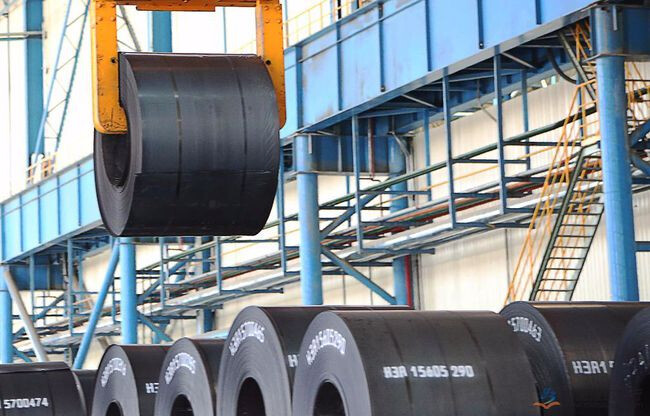
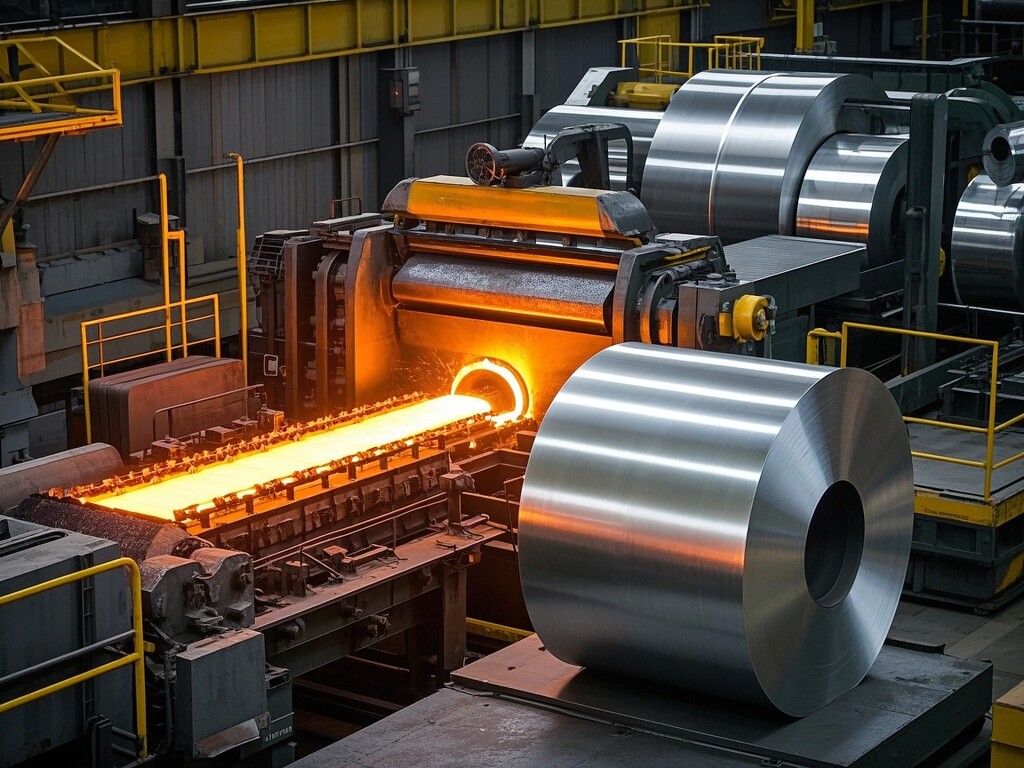
**Plate Products:** Hot-rolled coils, cold-rolled coils, medium-to-heavy plates, galvanized sheets, color-coated sheets. *Applications:* Machinery manufacturing, pressure vessels, shipbuilding, roofing and wall cladding, appliance casings.
**Structural Steel Shapes:** H-beams, I-beams, channel beams, angle bars, steel sheet piles. *Applications:* Building structures, factory frameworks, bridges, foundation pit support, shelving uprights.
**Pipe and Tube Products:** Seamless steel pipes, straight-seam welded pipes (ERW), spiral welded pipes (SSAW), galvanized pipes, square and rectangular tubes. *Applications:* Fluid conveyance, petrochemical industry, structural steel support, scaffolding.
**Bar and Wire Rod Products:** Deformed bars (rebar), round bars, wire rods. *Applications:* Concrete reinforcement, mechanical processing, manufacturing of standard fasteners.
II. Common International Standards and Material Grade Equivalents
**GB (National Standard):** China National Standards; common grades include Q235B, Q355B, HRB400E, 20#, and 45#.
**ASTM (American Standard):** American Society for Testing and Materials standards; common grades include A36, A572 Gr50, A53 Gr.B, and A500 Gr.B.
**JIS (Japanese Standard):** Japanese Industrial Standards; common grades include SS400, SM490A, STK400, and SGP.
**EN (European Standard):** European Standards; common grades include S235JR, S355JR, S275J0, and S355J2.
**BS (British Standard):** British Standards; common grades include B500B, 43A, and 50B. Approximate Material Equivalents (For reference only; not a direct substitute):
Q235B is approximately equivalent to SS400, A36, and S235JR.
Q355B is approximately equivalent to SM490A, A572 Gr50, and S355JR.
20# Steel is approximately equivalent to A106 Gr.B and S20C.
III. Common Product Specification Formats
H-Beams: Specified as Height × Width × Web Thickness × Flange Thickness. For example: HW 200×200×8×12 (Height: 200mm; Width: 200mm; Web: 8mm; Flange: 12mm). Common lengths are 6m, 9m, and 12m.
Square and Rectangular Tubes: Square tubes are specified as Side Length × Side Length × Wall Thickness; rectangular tubes are specified as Long Side × Short Side × Wall Thickness. For example: 100×100×5.0mm; 150×80×6.0mm. Common lengths are 6m, 9m, and 12m.
Hot-Rolled Coils/Sheets: Specified as Thickness × Width. For example: 3.0×1250mm (Thickness: 3mm; Width: 1250mm). The weight per coil typically ranges from 15 to 30 tons.
Deformed Steel Bars (Rebar): Specified by their nominal diameter. For example: 12mm, 16mm, 20mm, 25mm, 32mm. Corresponding US Standard designations: #3 (9.5mm), #4 (12.7mm), #5 (15.9mm), #6 (19.1mm), #8 (25.4mm).
IV. Key Quality Inspection Points
Chemical Composition Inspection: Conducted via spectroscopic analysis and cross-verification against the Mill Test Certificate (MTC) to ensure there is no mixing of steel grades.
Dimensional Tolerance Inspection: Measurements taken using calipers, micrometers, and tape measures, referencing standards such as ASTM A6, GB/T 709, and EN 10034.
Surface Quality Inspection: Visual inspection to ensure the absence of cracks, scabs, folds, or severe corrosion. Mechanical Property Testing: Tensile and bending tests are conducted to ensure that yield strength, tensile strength, and elongation meet the required standards.
Weight Verification: Verification is performed either by weighing (determining actual weight) or via theoretical calculation; the deviation between the actual weight and the theoretical weight must fall within the permissible tolerance range.
Plating/Coating Inspection: Coating thickness is measured using a thickness gauge; third-party salt spray testing may also be commissioned. For galvanized coatings, requirements adhere to ASTM A123 standards, mandating a minimum coating weight of 505 g/m².
V. Export Packaging and Sea Freight Considerations
Standard Sea Freight Packaging: Bundles are secured using steel straps or iron wire, with each bundle weighing no more than 3 tons. Corner protectors are inserted between the steel straps and the steel material to prevent indentation marks. The entire bundle is wrapped in PE rain-proof film, with edges reinforced for added protection.
Enhanced Packaging (Recommended for voyages exceeding 45 days or for destinations in high-salinity/coastal regions): Includes the addition of VCI (Vapor Corrosion Inhibitor) anti-rust paper wrapping; exposed cut ends are sprayed with anti-rust oil; and the bundles are enclosed in fully sealed waterproof bags or fitted with sheet metal corner guards.
Shipping Marks (Marks & Nos.): Must clearly display the product specifications, applicable standards, furnace/batch number, net/gross weight, and destination. It is recommended to include cautionary labels such as "Keep Dry," "Do Not Use Hooks," and "Center of Gravity."
VI. Quick Reference: Frequently Asked Questions
Q: What is the difference between hot-rolled coils and cold-rolled coils?
A: Hot-rolled coils feature a rougher surface finish, wider thickness tolerances, and a lower price point; they are primarily used for structural components. Cold-rolled coils feature a smooth surface finish, high dimensional precision, and superior strength; they are suitable for stamped parts, appliance casings, and automotive components.
Q: What is the difference between fixed-length and random-length materials?
A: Fixed-length refers to material cut and delivered in specific, uniform lengths (e.g., 12 meters); this option carries a higher price point and is typically used in standardized construction projects. Random-length refers to material supplied in varying lengths (e.g., a mix of lengths ranging from 5 to 11 meters); this option is more economical and is suitable for projects where precise length requirements are not strictly mandated.
Q: Can you arrange for third-party inspections?
A: Yes. We can arrange for pre-shipment inspections to be conducted by independent agencies such as SGS, BV, or Intertek. The costs associated with such inspections are subject to negotiation between both parties.
Q: What is the Minimum Order Quantity (MOQ)?
A: For standard products, the minimum order quantity is one 20-foot container (approximately 20–25 tons). We also support mixed-load shipments, allowing you to combine multiple product specifications within a single container.
Search Starts Here
Please give us a message